
How to run a category review that retailers approve first time
Most FMCG suppliers treat a category review like a presentation exercise. They pull scan data, build a deck, argue for more space, and hope the buyer agrees. The suppliers who consistently get approved do something different. They bring evidence the buyer can see, interrogate, and trust enough to act on without visiting a single store.
The gap between the two approaches is not effort. It is method. This article covers what a category review decides, where submissions typically stall, and how to build one that gets through first time.
What a category review decides
A category review is the formal process where a retailer evaluates a product category and decides what changes to make to range, space allocation, shelf positioning, and promotional display. Most major retailers run reviews on an annual calendar, though the cycle length varies by retailer and category. Some categories are reviewed every six months. Others run on a 12-month cycle. The review process itself can take anywhere from two to eight months from submission to decision.
The table below breaks down what’s in scope during a typical review and what the buyer expects the supplier to demonstrate.
| Decision area | What the retailer is evaluating | What the supplier needs to demonstrate |
|---|---|---|
| Range | Which SKUs stay, which go, which are added | That your products drive incremental category growth, not just brand switching |
| Space allocation | How much shelf space each brand and segment receives | That the space you’re requesting reflects shopper demand data, not just brand ambition |
| Shelf positioning | Where products sit on the fixture (eye level, end cap, secondary placement) | That your proposed positioning improves category navigation and shopper flow |
| Promotional display | Which brands get off-shelf or feature placement | That your promotional plan delivers measurable category uplift, not just brand uplift |
The people in the room typically include the retailer’s category buyer and category manager (sometimes the same person), and potentially a senior commercial lead for major categories. On the supplier side, it’s usually a national account manager or category manager, sometimes with a marketing or insights lead.
The critical point most suppliers miss: the buyer is not evaluating whether your brand deserves more space. They are evaluating whether the category performs better with your proposal than without it. Every piece of evidence needs to answer that question.
Three things that stall approval
- Data without spatial context
Scan data tells you what sold. It does not tell the buyer what happens if they move your product to eye level, reduce a competitor’s facing count, or add a secondary display. Buyers see hundreds of submissions a year, most built on the same data sets. What separates a strong submission from a forgettable one is whether the data connects to a spatial recommendation the buyer can visualise.
- Proposals that only work in one store format
A planogram designed for a 60-metre aisle does not necessarily work in a 40-metre format. Retailers operating multiple store formats – and most major retailers do – need to see that a range or layout change holds up across their network. Submitting a single-format proposal to a multi-format retailer signals that you have not thought about how the change scales.
- No visual evidence of what the change looks like
Flat planograms and 2D shelf diagrams are still the default submission format. They show product placement. They do not show what a shopper sees when they stand in front of the fixture. Buyers are being asked to approve changes that affect store-level execution across hundreds of locations. The less they have to imagine, the faster they decide.
The table below maps each gap to a practical fix.
| Submission gap | Why it stalls approval | How to close it |
|---|---|---|
| Data without spatial context | Buyer can’t connect sales data to a physical shelf outcome | Pair scan data with visual simulations showing the proposed layout in a realistic store environment |
| Single-format proposal | Does not account for the retailer’s store network variability | Test and present your proposal across at least two store formats before the review |
| 2D planograms only | Forces the buyer to imagine what the change looks like at shelf level | Present with 3D walkthroughs that show the shopper’s perspective, not just a top-down view |
How to build a submission that gets approved
The strongest category review submissions share three characteristics: they combine performance data with visual evidence, they show how the proposal works across store formats, and they give the buyer something to interact with rather than just review.
Combine scan data with visual simulation
Start with category performance data. Then connect it to a visual representation of what the proposed change looks like at shelf level. This means building a realistic 3D model of the fixture, populating it with the proposed range and layout, and presenting it alongside the data that supports the change.
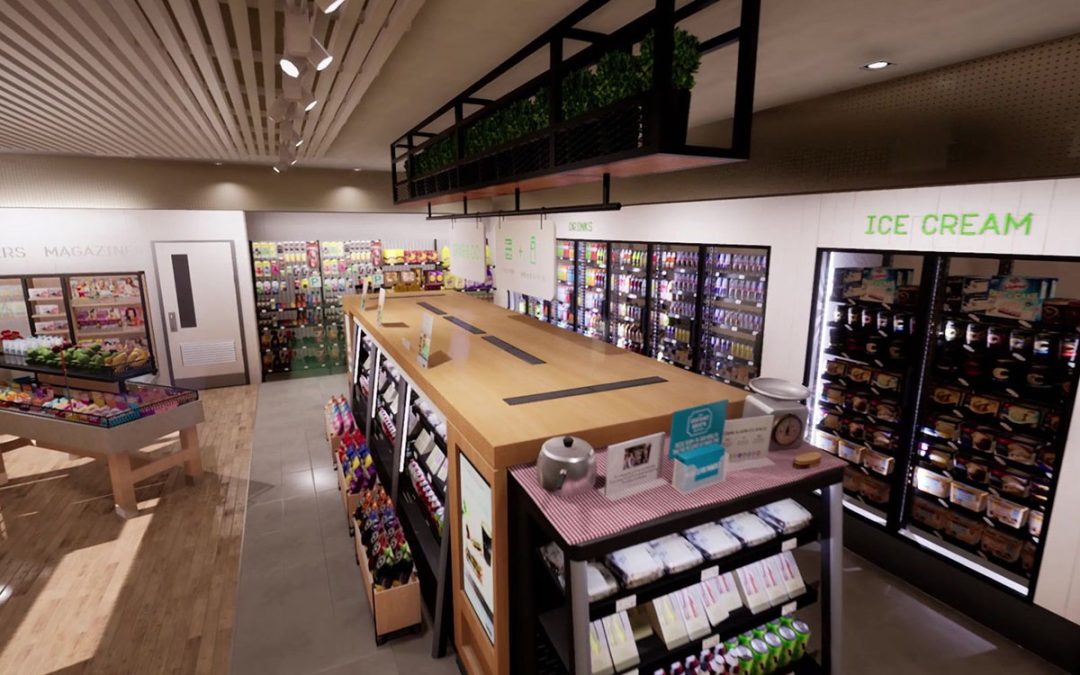
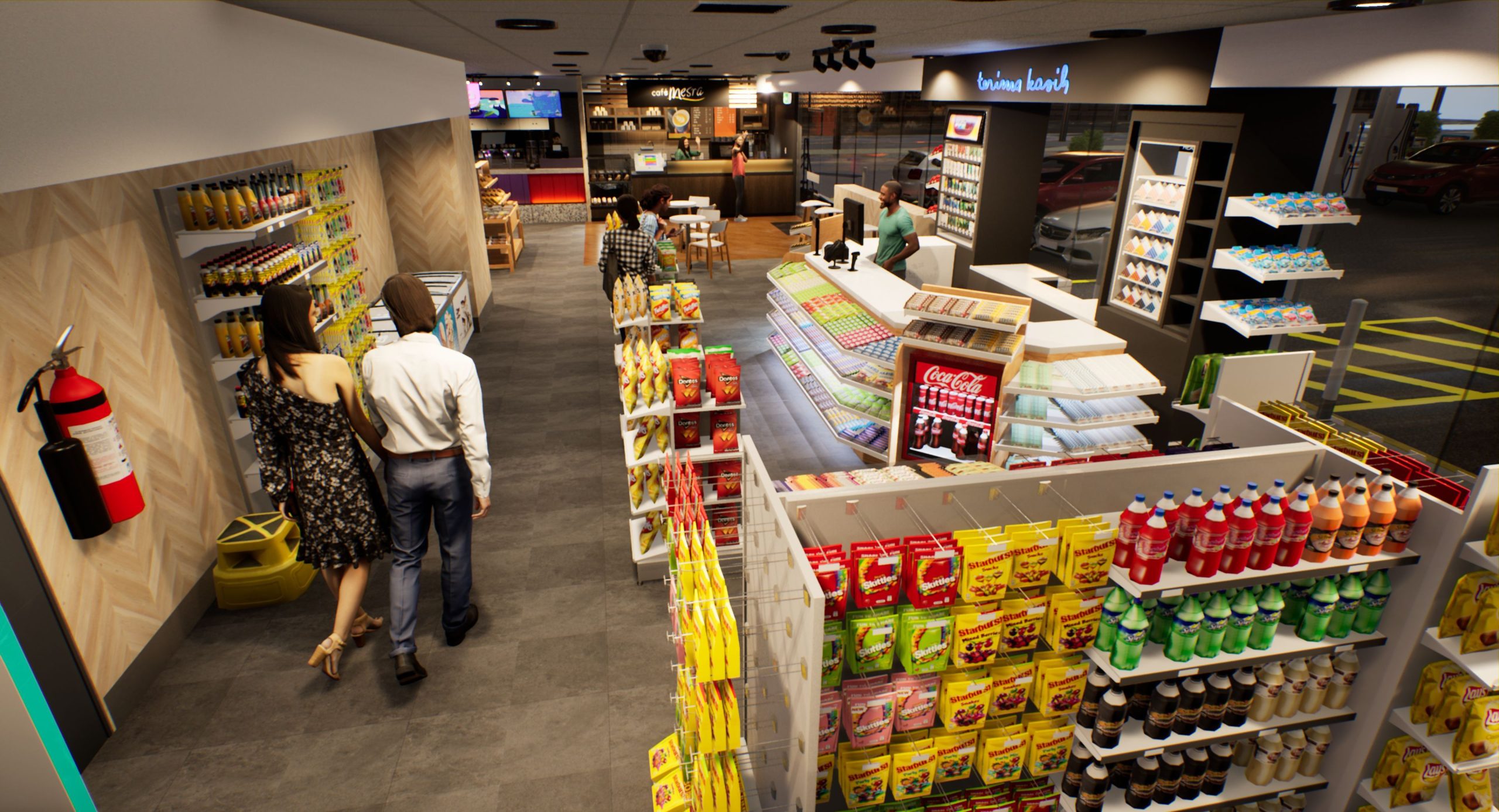
Storelab’s Connect platform is built for this step. It lets suppliers create photo-realistic virtual store environments where buyers can walk through the proposed layout, evaluate sightlines from the shopper’s perspective, and compare before-and-after scenarios without visiting a physical store.
Test across multiple store formats
Before the review meeting, test your proposal in at least two store formats that represent the retailer’s network. A change that increases category performance in a large-format supermarket might create ranging problems in a smaller metro or express format.
Virtual simulation makes this practical. Instead of physically visiting and photographing multiple store types, suppliers can build format-specific environments and test the same range change across each one. Few competitors present format-specific evidence, and that gap is where most submissions gain their edge.
Present with 3D walkthroughs and shopper data
The final presentation should include at least one 3D walkthrough that puts the buyer inside the proposed store environment. Eye-tracking data from shopper research adds another layer: it shows which products shoppers notice first, where their attention lingers, and where the layout creates blind spots.
Storelab’s Research product captures this eye-tracking data within virtual store environments, giving suppliers quantified evidence of shopper attention patterns rather than assumptions about what should work.
Category review submission checklist
Before your next review meeting, check your submission against these seven elements.
- Category performance data – scan data, share trends, growth drivers, and any category-level insights that frame your proposal as a category play, not a brand play
- Shopper insights – who is buying, when, and why, drawn from research data rather than internal assumptions
- Visual simulation – a realistic 3D representation of the proposed layout in a store environment the buyer recognises
- Format-specific evidence – the same proposal tested across at least two of the retailer’s store formats
- Before-and-after comparison – current layout versus proposed layout, presented visually so the buyer can see the difference immediately
- Eye-tracking or visibility data – quantified evidence of shopper attention patterns, not assumptions about what shoppers see
- A clear category growth story – a narrative that shows how your proposal grows the category, not just your share of it
Remove the translation step
The difference between a submission that gets approved and one that gets deferred to the next cycle usually comes down to how much work the buyer needs to do after the meeting. When a buyer can walk through the proposed layout in 3D, see shopper attention data, and compare performance across formats, they have what they need to make a decision in the room. When the submission is a deck of slides with scan data and a flat planogram, the buyer has to translate that into a spatial outcome, check it against their own store knowledge, then socialise it with their commercial team. That is where proposals lose momentum.
Storelab’s Connect and Research platforms give FMCG suppliers the visual evidence and shopper data that close this gap. If your next category review window is approaching, talk to Storelab about building a submission with virtual evidence that the buyer can see, walk through, and approve.