
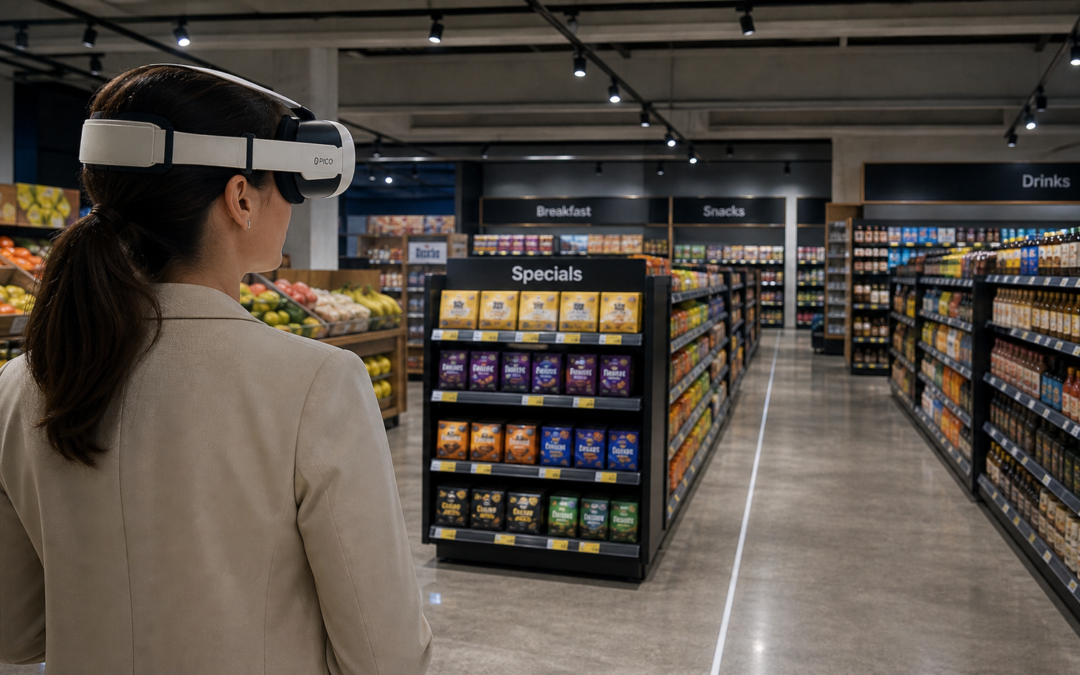
Can a VR digital twin prevent a bad store rollout?
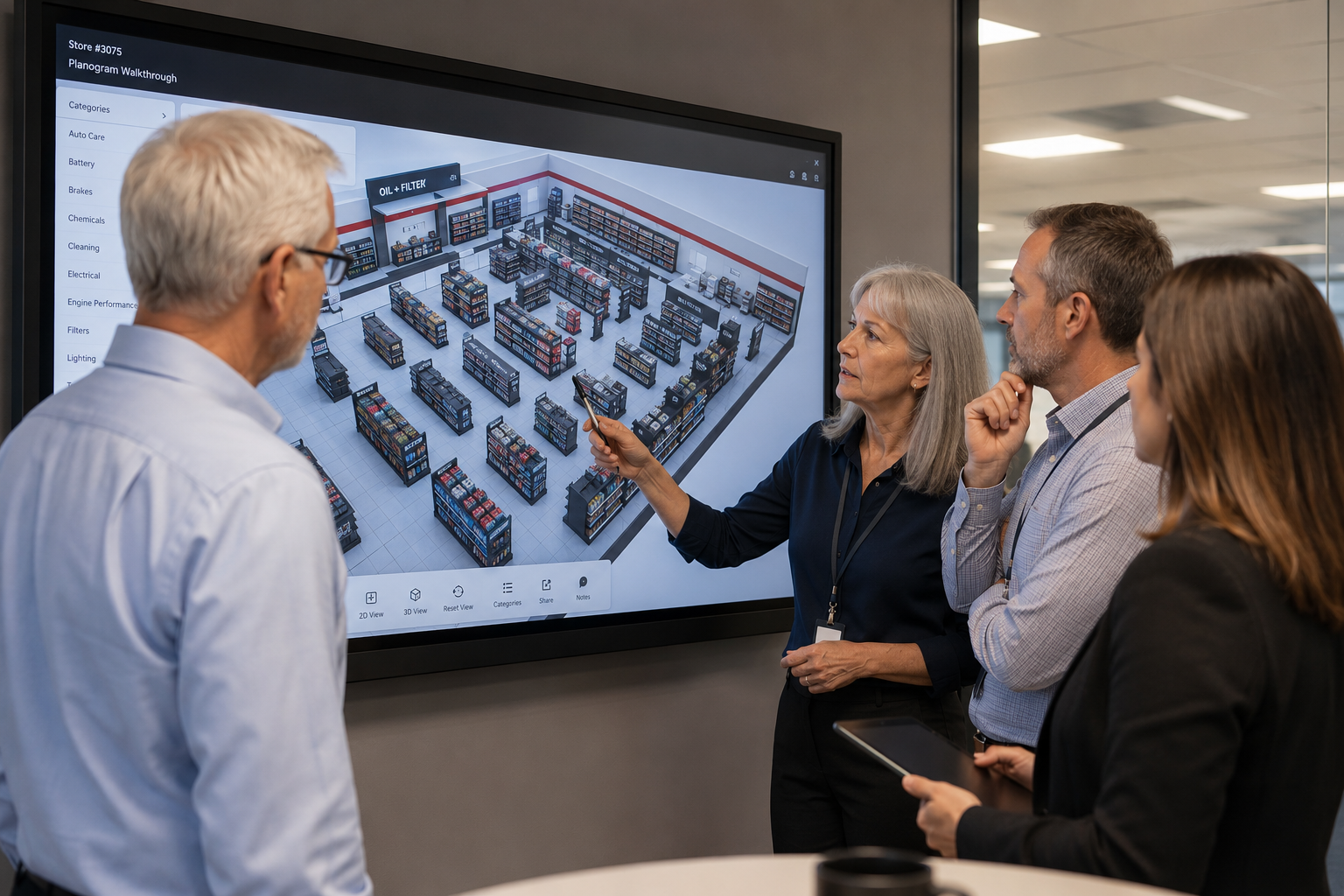
A head of retail approves a new layout because the planogram works on paper, the CAD drawing fits the footprint, and the commercial deck tells a neat story. The first stores then report problems: a feature fixture blocks the main sightline, the promotional zone sits outside the traffic path, or store teams need extra space the guide never allowed.
A retail digital twin can reduce that risk before the rollout reaches the network. Storelab works with retailers and FMCG teams on VR retail simulation and virtual store software, including Storelab Connect for 3D store visualisation and Storelab Research when shopper attention or behaviour needs to be tested. The point is not to make a store look impressive. The point is to help teams see the decision in context before they commit capital, labour, and store time.
Why store rollouts fail after sign-off
Store rollouts often fail after sign-off because planning files simplify the store environment. A floor plan can show that a fixture fits. It may miss how that fixture changes shopper movement, staff workflow, category visibility, or the feel of the store.
The risk grows when several teams approve the same project from different documents. Operations may read the layout for execution. Merchandising may read the planogram for range logic. Commercial leaders may read the deck for the business case. Store teams then inherit the physical version, where the hidden conflicts appear.
- Sightlines are missed in flat drawings, especially from real customer approach paths.
- Category adjacencies can look logical in a plan and still feel confusing in store.
- Fixtures may fit the footprint while narrowing a path or blocking a decision point.
- Promotional displays can compete with permanent merchandising instead of supporting it.
- Store formats may vary more than head office expected.
- Staff instructions can be harder to execute than the approval deck suggested.
What a retail digital twin shows before rollout
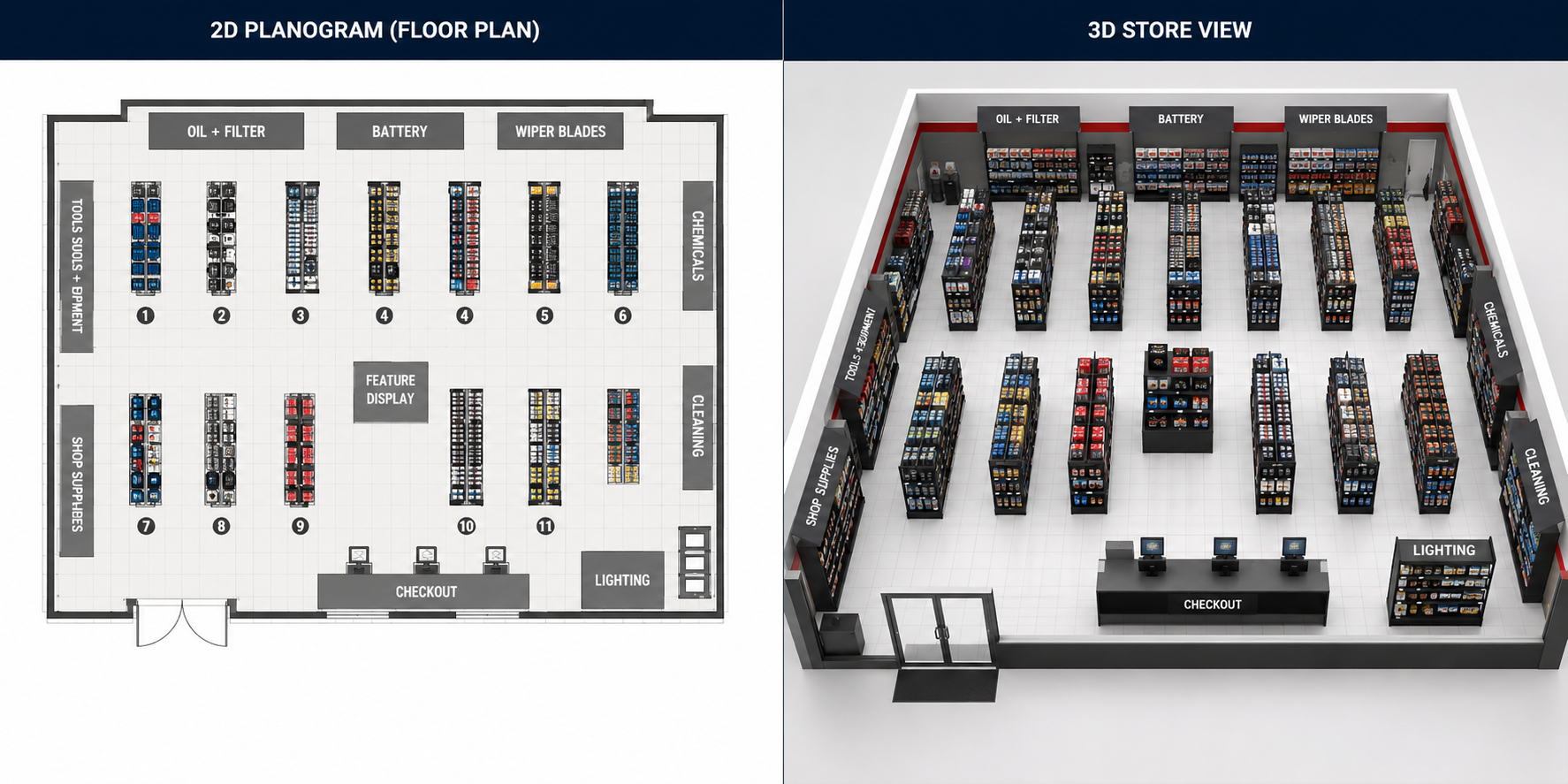
A retail digital twin is a 3D representation of a store environment that lets teams inspect, test, and align layout or merchandising decisions before physical execution. It gives decision-makers a store-view reference, rather than asking them to infer the customer experience from a plan, deck, or spreadsheet.
For a retail team, the useful part is behaviour in context. A good VR digital twin can show whether a proposed fixture is visible, whether a category story makes sense from the aisle, and whether a campaign has enough physical space to be built as approved.
A 3D virtual store software environment may include fixtures, category zones, product ranges, SKUs, promotional spaces, sightlines, store flow, store-format variants, campaign displays, and shopper-view perspectives. That combination helps leaders see how the proposed change behaves inside a realistic store environment.
What problems can a VR digital twin catch early?
A VR digital twin can catch early rollout problems by turning hidden physical constraints into visible planning issues. It does not guarantee a perfect rollout. It can reduce uncertainty at the point where changes are still cheaper and easier to make.
| Rollout risk | What the team sees in files | What a VR digital twin can reveal |
|---|---|---|
| Blocked sightlines | The fixture fits the floor plan | The display hides the category or promotional message from key approach paths |
| Weak category flow | Adjacent categories look logical | The shopper journey feels fragmented or sends customers past the wrong cues |
| Poor fixture placement | The unit fits the allocated space | The fixture narrows a pathway, competes with another zone, or sits outside natural traffic |
| Hard-to-execute displays | The campaign guide looks clear | Store teams may need more space, clearer instructions, or a different display method |
| Format variation | One concept is approved | Smaller, older, or non-standard stores may need a different version |
This is where 3D store software can improve the quality of the discussion. It gives commercial, operations, merchandising, and field teams a shared object to inspect. Instead of debating separate files, they can review the same proposed store change.
Where virtual store software helps most
Virtual store software helps most when the decision is expensive to reverse, difficult to explain in flat documents, or likely to change across store formats. It is less valuable for routine changes that are already low risk and well understood by store teams.
- New store concepts: teams can see whether the concept works beyond the presentation deck.
- Major refits: leaders can review the customer journey before capital is committed.
- Category resets: merchandising teams can test adjacencies, fixture visibility, and shopper attention.
- Promotional campaigns: teams can see whether the campaign fits the store before field execution begins.
- Multi-site rollouts: operations can check how one approved idea changes across store formats.
- FMCG and retailer collaboration: brands and retailers can align around what the shelf or category will look like in context.
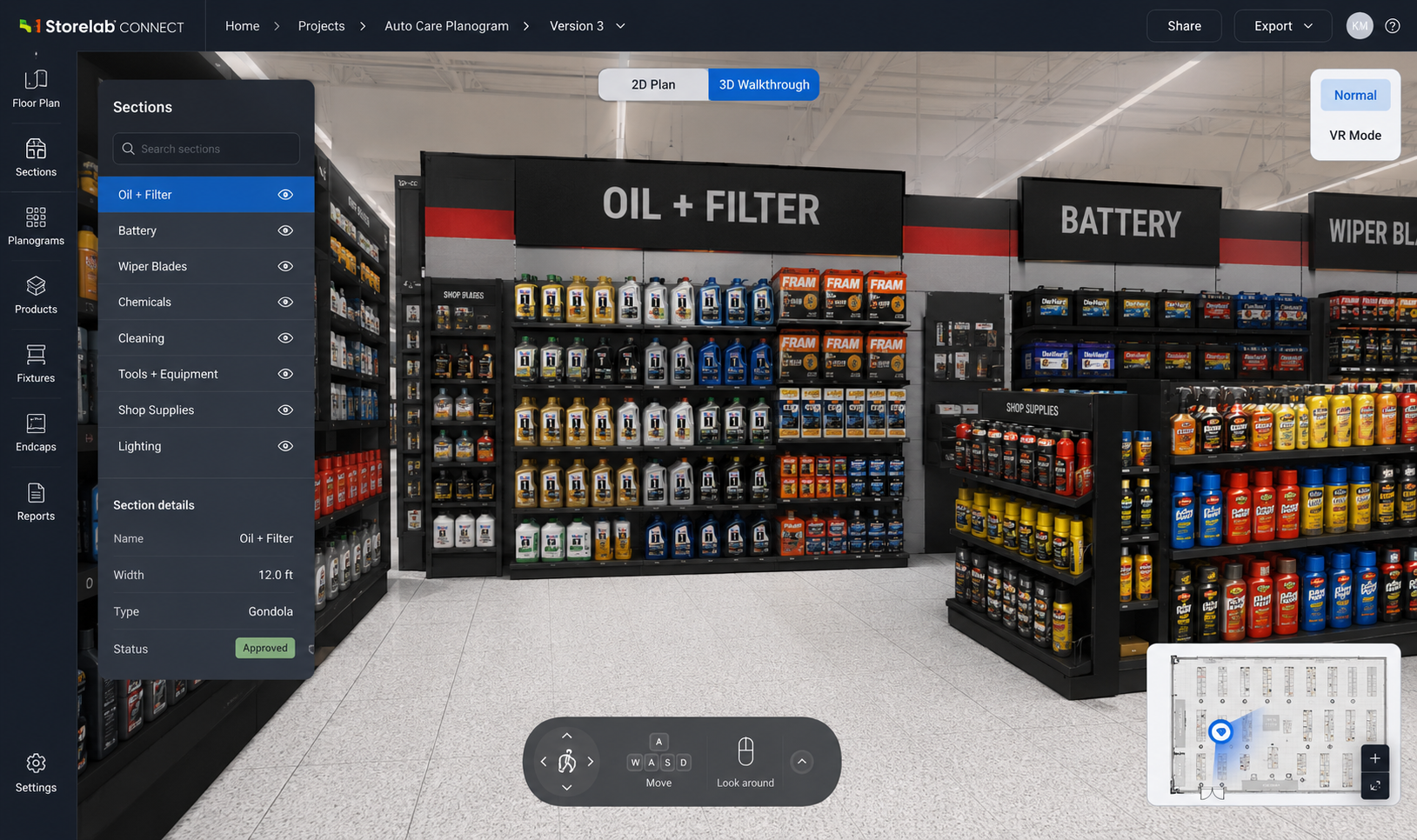
Storelab Connect is most relevant when teams need to see store layouts, planograms, fixtures, and category decisions in 3D before rollout. Storelab Research is useful when the team needs evidence on shopper attention, pathing, or decision behaviour, rather than relying only on internal judgement.
Where a VR digital twin will not solve the problem
A VR digital twin works best when the team has a clear question, accurate inputs, and a decision that benefits from being seen before it is built. It cannot repair every weakness in a retail programme.
- Poor commercial strategy.
- Weak range decisions.
- Inaccurate source data.
- Incomplete fixture measurements.
- Weak field communication.
- Stock availability problems.
- Staff training gaps.
- Decisions that need live trading data.
A VR digital twin also depends on the quality of the assets and assumptions behind it. If the fixture dimensions are wrong, the store model will carry that error forward. If the team has not agreed what question is being tested, the 3D review may become another approval meeting with better visuals.
The strongest use case is a decision with physical uncertainty. A refit, layout change, category reset, fixture trial, or campaign rollout is a better fit than a question that belongs to pricing, ranging, stock, or live sales performance.
How to decide if a VR digital twin is worth using
A VR digital twin is worth considering when seeing the proposed store change could reduce delay, rework, or poor field execution. The decision does not need to be high-tech. It needs to carry enough store-level risk to justify testing before physical rollout.
- Is the rollout expensive to reverse?
- Will the decision affect shopper movement or visibility?
- Are several teams arguing from different versions of the truth?
- Will the concept need approval from executives, retailers, landlords, or brand partners?
- Are store formats different enough that one version may fail in part of the network?
- Would seeing the environment reduce the risk of delay, rework, or field confusion?
If several answers are yes, a retail digital twin is likely worth discussing before physical rollout. The cost of testing a decision virtually needs to be weighed against the cost of rebuilding, rebriefing, or correcting the same decision after it has reached stores.
What Storelab helps teams test before rollout
Storelab helps retail teams test store decisions before the physical work begins. The value sits in the link between visualisation, research, approval, and execution, rather than in any single 3D view.
Storelab Connect helps teams visualise layouts, fixtures, planograms, and category decisions in a 3D retail environment. For a refit, reset, or new concept, this can give commercial and operations leaders a shared view of what the approved decision will look like in store.
Storelab Research can be used when the question needs shopper evidence. If a team needs to understand attention, decision paths, recall, or category navigation, a virtual retail store software environment can give the research team a controlled way to compare options before store disruption begins.
Storelab Storyteller is useful when the challenge is stakeholder alignment. A video or guided visual output can help executives, retail partners, landlords, brand teams, or field leaders understand the decision without interpreting raw files.
Storelab Fieldforce fits later in the rollout, when the approved campaign or layout moves into stores. It can help teams compare field execution against the intended version and identify where compliance or communication needs work.
For retail teams planning a layout change, refit, category reset, new fixture, or campaign rollout, the practical question is simple: should this decision be seen and tested before money is spent in stores? If the answer is yes, Storelab is worth speaking to before the rollout moves from approval to execution.