
VR Store Simulation vs Physical Test Stores – What can Retailers Learn Faster?
Retailers have long relied on physical test stores to trial new layouts, ranges and concepts before wider rollout.
The logic is straightforward. If a change works in a real store, it should work elsewhere.
In practice, physical test stores introduce trade-offs that are rarely discussed openly. They deliver realism, but they are slow, costly and difficult to control. Virtual store simulations emerged not as a replacement for physical testing, but as a way to answer certain questions faster and with fewer constraints.
The distinction between the two matters less in theory than it does in execution. Each method reveals different insights, and each fails in different ways.

What Physical Test Stores Do Well
A physical test store offers something no simulation can fully replicate. It exists in the real world, with real shoppers, real distractions and real operational constraints.
Physical testing is particularly strong when retailers need to understand:
Test stores require time to set up, time to observe and time to unwind. Once fixtures are moved and stock is committed, changes become difficult to reverse quickly. This often limits how many alternatives can be tested and how early testing can begin.
What Virtual Store Simulation Changes
Virtual store simulation approaches the same questions from a different angle.
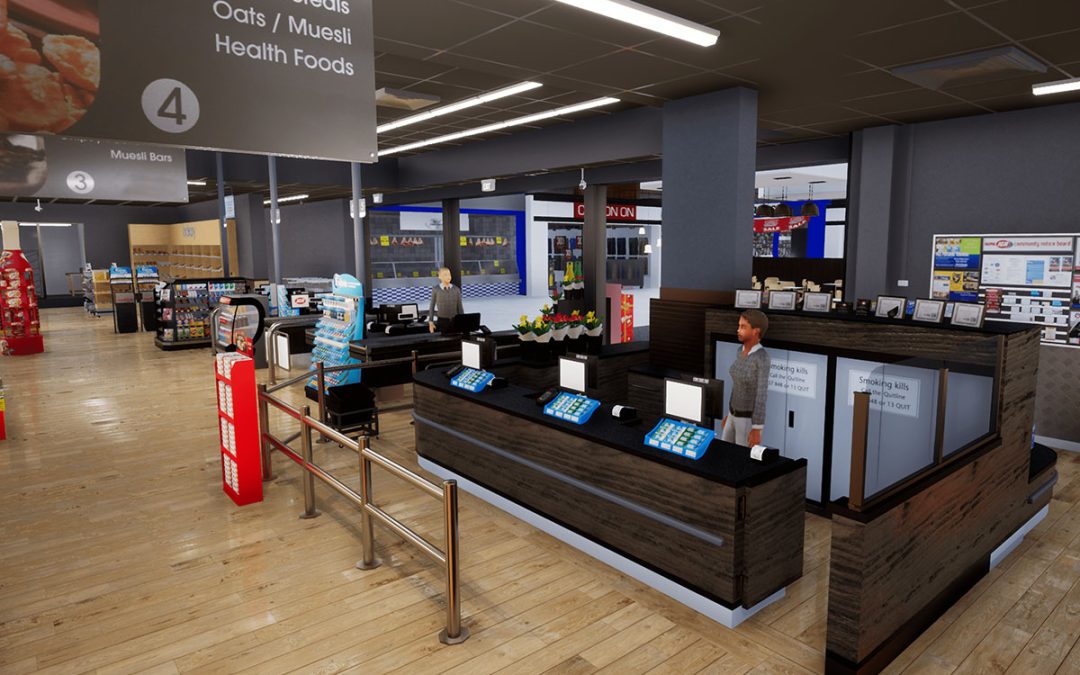
Instead of asking how a concept performs once it is live, simulation asks how it behaves before it reaches stores. Layouts, planograms and displays are placed into a realistic digital environment where they can be experienced, compared and adjusted without physical disruption.
This allows retailers to learn faster in several key areas.
Speed of Iteration
One of the most significant differences is speed.
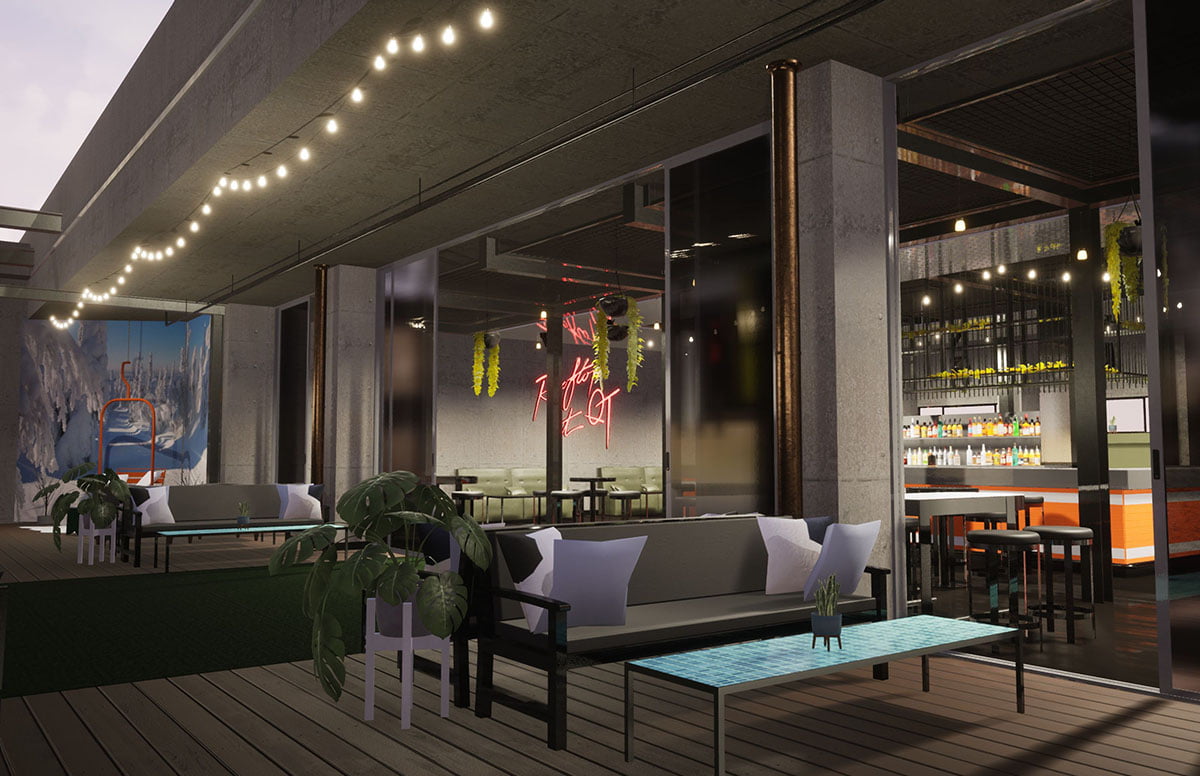
In a physical test store, testing multiple layout variations often means weeks or months between changes. In a virtual environment, alternatives can be created and reviewed in rapid succession.
This makes it possible to:
Early-Stage Decision Support
Physical test stores tend to be used late in the planning process, when concepts are already well formed. At that stage, changes are costly and often incremental.
Virtual store simulation shifts learning earlier.
It is particularly effective when teams need to:
Controlled Comparison
Live stores introduce variables that are difficult to isolate. Foot traffic fluctuates. Local shopper demographics differ. Weather, staffing and promotions interfere with results.
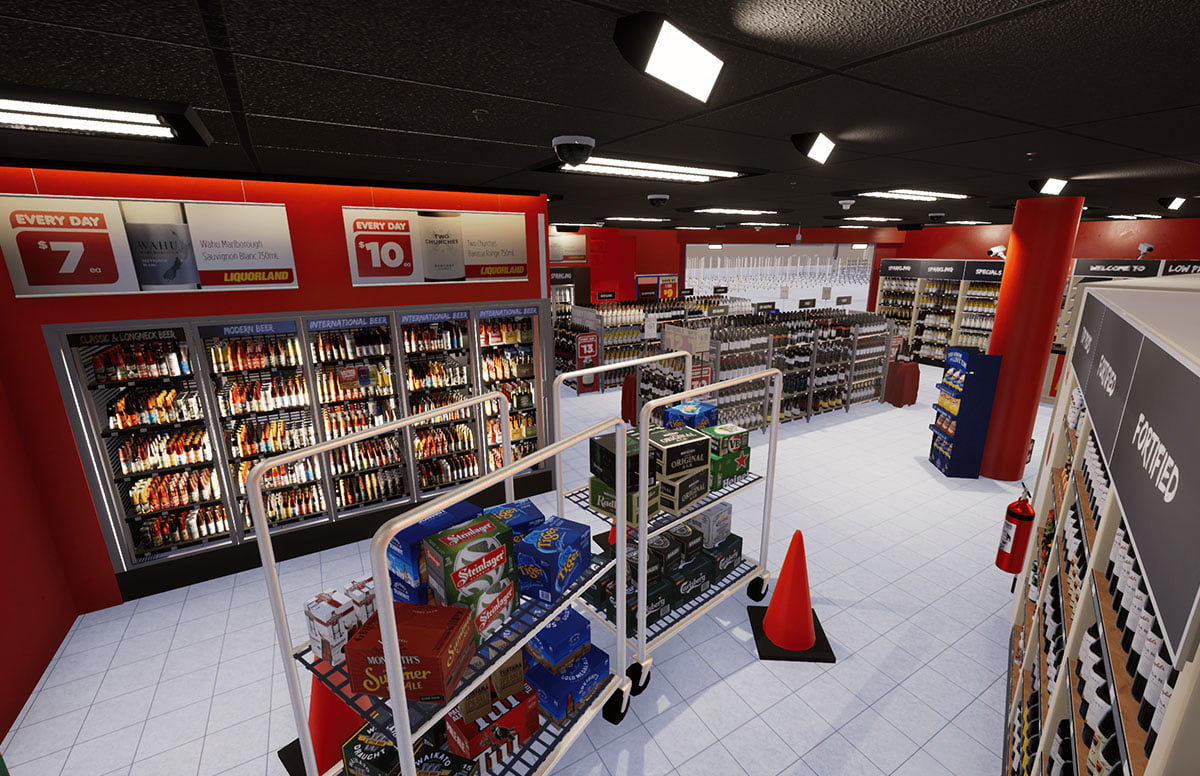
Virtual simulations provide a more controlled setting. While they do not replicate every real-world variable, they allow teams to compare layouts under consistent conditions.
This makes it easier to understand whether differences in outcome are driven by design choices rather than external noise.

What Physical Test Stores Still Reveal Better
Despite their advantages, simulations do not replace physical testing entirely.
Certain insights remain better suited to live environments, including:
Choosing the Right Tool for the Right Question
The most effective retail planning strategies do not treat virtual simulation and physical testing as competitors. They treat them as complementary.
Virtual store simulations tend to answer questions about:
- Visibility and navigation
- Shopper attention and interaction
- Layout logic and flow
- Relative performance of alternatives
Physical test stores tend to answer questions about:
- Sustainability of execution
- Operational impact
- Long-term performance
Learning Earlier Changes Outcomes
The practical difference between these approaches is not realism versus abstraction. It is timing.
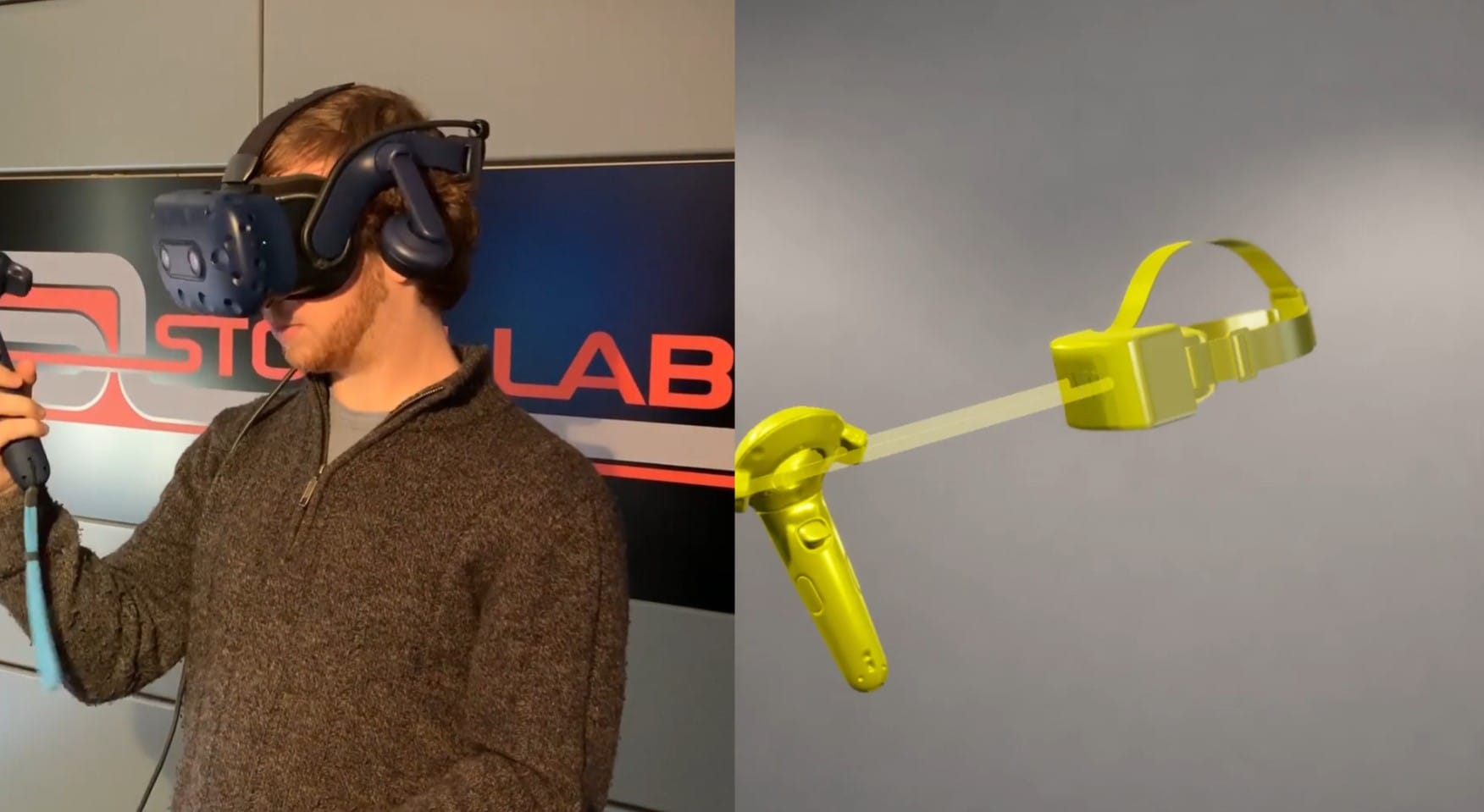
Virtual store simulation allows retailers to learn when decisions are still flexible. Physical test stores confirm those decisions under live conditions.
When learning happens earlier, fewer assumptions make it through to rollout unchecked. That shift alone often explains why teams using simulation feel better prepared by the time concepts reach stores.
In an environment where margins for error are narrow, learning faster can matter as much as learning accurately.
Frequently Asked Questions
What is the difference between a virtual store simulation and a physical test store?
Do virtual store simulations replace physical test stores?
No. Virtual store simulations are typically used earlier in the planning process to test and refine ideas, while physical test stores are used later to validate decisions in live environments.
What do retailers learn faster using virtual store simulation?
Retailers can learn faster about layout effectiveness, product visibility, shopper navigation and comparative performance of different planogram options.
What insights are better captured in physical test stores?
Physical test stores are better suited to understanding operational execution, supply chain impacts, staffing behaviour and long-term sales performance.
When should retailers use virtual store simulation instead of physical testing?
Virtual store simulation is most useful in early stages, when multiple concepts need to be explored quickly and changes are still easy to make.
Can results from virtual store simulations be trusted?
When simulations are built using realistic store formats and combined with behavioural measurement, they can provide reliable insight into shopper behaviour and layout performance.