
What Is a VR Store Simulation and When Is It Used in Retail?
For decades, retail teams have relied on drawings, spreadsheets and physical mock-ups to imagine how stores might perform once changes were rolled out.
These tools helped plan layouts and ranges, but they left a critical gap between design and reality.
A VR store simulation addresses that gap.
In a retail context, a VR store simulation is a digital recreation of a real store environment used by retailers, brands and category teams to evaluate layouts, planograms and shopper behaviour before changes are implemented in physical stores. It is a planning and research tool, not a form of entertainment.
While the term is often associated with consumer games, professional VR store simulations serve a different purpose. They are built to replicate real store formats, real constraints and real shopping conditions, allowing teams to experience decisions in context rather than on paper.
As grocery and FMCG environments become more complex, this approach is increasingly used to reduce risk, align stakeholders and test assumptions early, when changes are still easy to make.
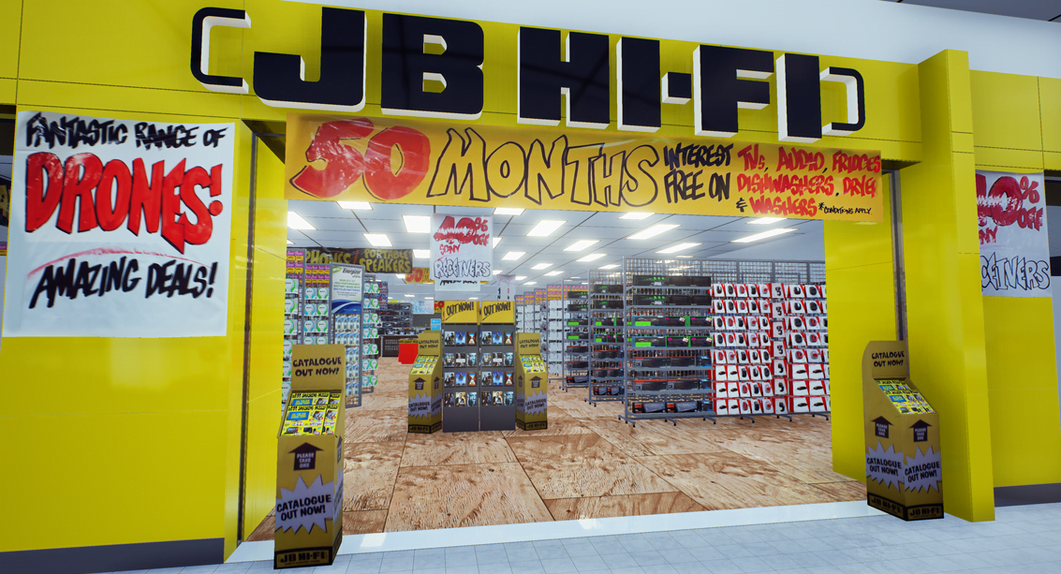
What a VR Store Simulation Is in Practice
A VR store simulation recreates a retail environment in three dimensions, allowing users to move through aisles, view shelves, approach displays and interact with products much as a shopper would in a physical store.
Unlike flat planograms or static renders, the simulation places decisions into spatial context. Sightlines, adjacency, shelf height and aisle flow become immediately visible. Subtle design choices that are difficult to evaluate on a screen can be experienced directly.
Modern VR store simulation platforms allow teams to:
Create and compare multiple versions of layouts and planograms

Why Retailers Use VR Store Simulations
Retail decisions often involve significant investment long before shoppers encounter the result. By the time a new layout, range or campaign reaches stores, reversing it can be expensive and disruptive.
VR store simulations are used to reduce that exposure.
They are particularly valuable when teams need to:
How VR Simulation Fits With Traditional Planning Tools
Retail planning has traditionally relied on a combination of historical sales data, 2D planograms and physical test stores. Each has strengths, but all have limitations.
VR store simulations sit between physical and abstract tools.
Compared with traditional approaches, they offer:
From Visualisation to Shopper Insight
The value of a VR store simulation increases when it is combined with behavioural measurement.
In research programs, simulations can be used to observe how people navigate shelves, where they look, how long they dwell and what they engage with. When paired with tools such as eye tracking, simulations provide insight into attention and decision-making that is difficult to capture through sales data alone.
This allows retail teams to examine questions such as:
When VR Store Simulation Is Most Useful
Common use cases include:
Distinguishing Retail VR Simulation From Consumer Games
Because the phrase “VR store simulation” is widely used in gaming, it is important to clarify intent.
A professional VR store simulation is:
- Designed to reflect real retail formats and constraints
- Used by retailers, brands and research teams
- Built to generate insight and reduce risk
- Evaluated on accuracy and usefulness rather than enjoyment
Understanding this distinction helps retail professionals find relevant information and ensures the technology is assessed on its intended purpose.

A Practical Tool for Modern Retail Planning
Retail planning increasingly demands evidence, speed and alignment. VR store simulation does not replace traditional tools, but it complements them by bringing decisions closer to real-world conditions earlier in the process.
By allowing teams to experience stores before they exist physically, simulation shifts uncertainty forward, when it is easier and less costly to address. Platforms such as STORELAB™ Connect™ reflect this shift, supporting retail teams as they move from abstract planning toward informed, experience-based decision-making.
For retailers and brands navigating complex store environments, VR store simulation has become a practical part of how modern retail strategies are tested, refined and delivered.
Frequently Asked Questions about VR Store Simulators
What is a VR store simulation in retail?
A VR store simulation is a digital recreation of a real retail store used by retailers and brands to test layouts, planograms and shopper behaviour before implementing changes in physical stores.
How is a VR store simulation different from a VR store game?
A VR store game is designed for entertainment. A VR store simulation for retail is a professional planning and research tool used to support real business decisions.
Who uses VR store simulations?
They are used by grocery retailers, FMCG brands, category managers, insights teams and retail planners.
What types of decisions can be tested using VR store simulation?
Common applications include planogram testing, layout evaluation, new product and packaging assessment, and campaign planning.
Are VR store simulations accurate?
When built using realistic store environments and combined with behavioural measurement, VR store simulations can closely reflect real shopper behaviour and decision-making.
When should retailers consider using VR store simulation?
VR store simulation is most valuable before large-scale rollouts, category resets or major in-store changes, when the cost of making changes later is high.