


Supermarket item placement: what decides where a product sits
A supermarket item placement strategy decides where a product sits on the shelf. Four things settle it, in roughly this order. The job the category does for the store. The order the shopper works through in front of the shelf. The space the product’s rate of sale has earned. And what the fixture will physically hold. Eye level is the most quoted rule and the weakest one on its own. It only tells you what to do with the two or three products you have already decided matter most.
You will know the argument. A category review date is set, and two people with the same sales data want the product in different places. One has a chart. The other has a view about eye level.
What supermarket item placement strategy means
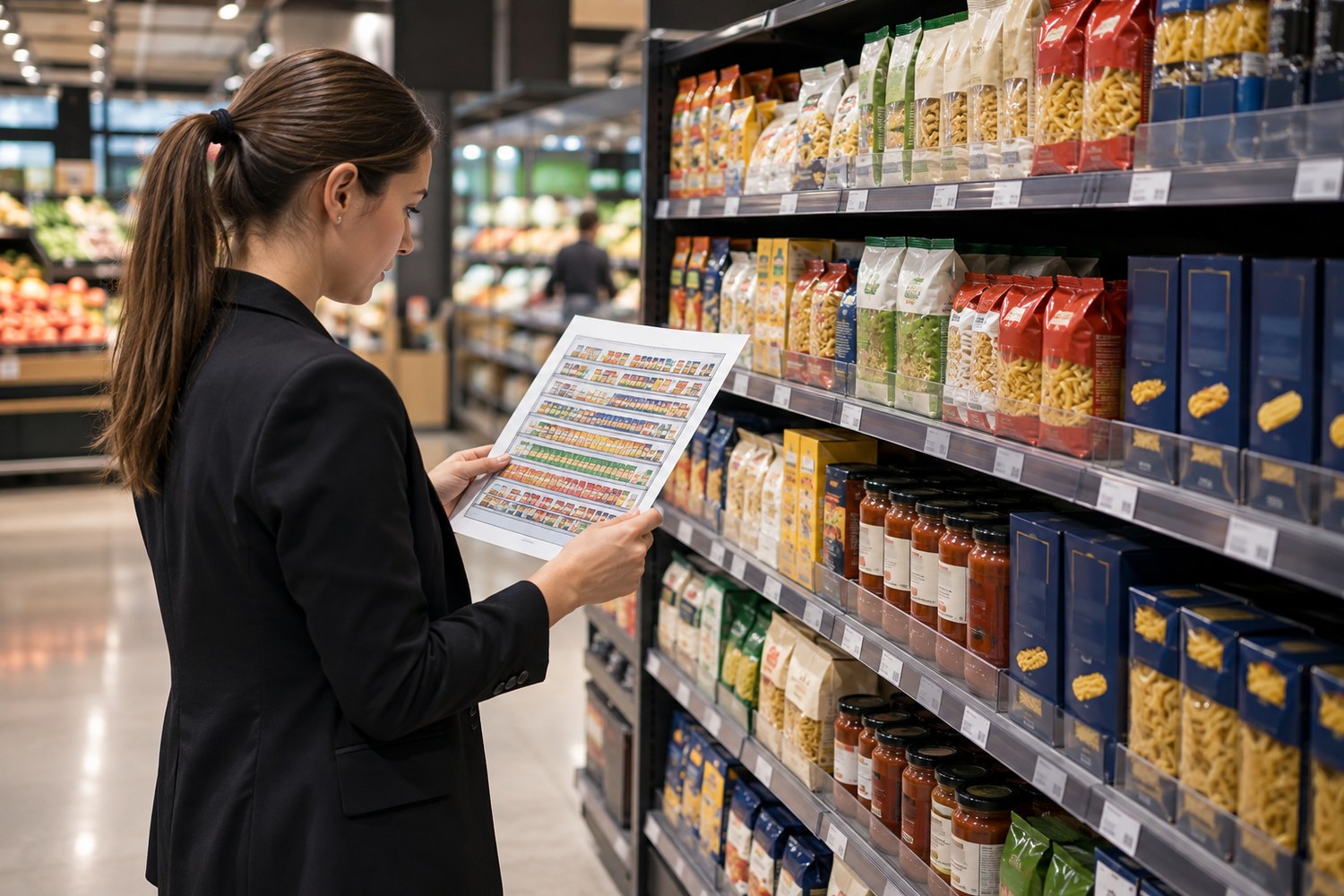
Supermarket item placement strategy is the set of rules that decide where a product sits inside a fixture. It also decides how much of that fixture the product gets. A fixture is the run of shelving a category lives on. One bay is one section of it.
This is not store layout. Store layout decides where whole categories go and how a shopper moves between them. A placement decision starts after that, at one fixture, with the range already chosen.
It is not the same as visual merchandising either. That is how the offer is dressed and presented once the plan is set. The line between the plan and the presentation is worth reading properly, because the two are led by different people.
The decision usually sits with a category or space planning team. They work centrally, from range data and sales data. A supplier puts a case alongside them. The output is a planogram, which is a flat diagram of the bay. It shows which product goes where, and how many facings each one gets. A facing is one unit of a product visible at the front of the shelf.
How a shopper reads the shelf

A shopper arrives at the fixture with part of the decision already made. The shelf either matches the order they are working in or fights it.
Two sequences cover most categories. Some shoppers pick the brand first, then the variant inside it. Others pick the variant or the need first, then choose a brand within that. Nappies are usually shopped by size before brand. Beer is often shopped the other way round.
Block direction follows the sequence, not the other way round. A block is a group of products kept together on the shelf. A brand-first shopper is served by a vertical brand block. That brand then runs top to bottom in one place. A need-first shopper is served the other way. The variants run together across the shelf, so sizes or flavours sit side by side.
Block direction is a product merchandising decision, not a tidiness decision. Get it backwards and you build a shelf that looks neat and shops badly. The shopper has to cross the bay twice to finish a choice they came in ready to make.
Scanning up and down does not work like scanning along, and the difference has been measured. A 1994 field study by Drèze, Hoch and Purk looked at supermarket shelves. Moving a brand from the worst to the best vertical position was worth 39 per cent on average. Moving it from the worst to the best horizontal position was worth 15 per cent. Worst to best on both axes together came to 59 per cent. That work ran in one American supermarket chain in the early 1990s. Treat the figures as what that study found, not as a rule for your category.
The direction of the finding is the part that travels. Moving a product up or down does more than moving it along.
What earns a product its space
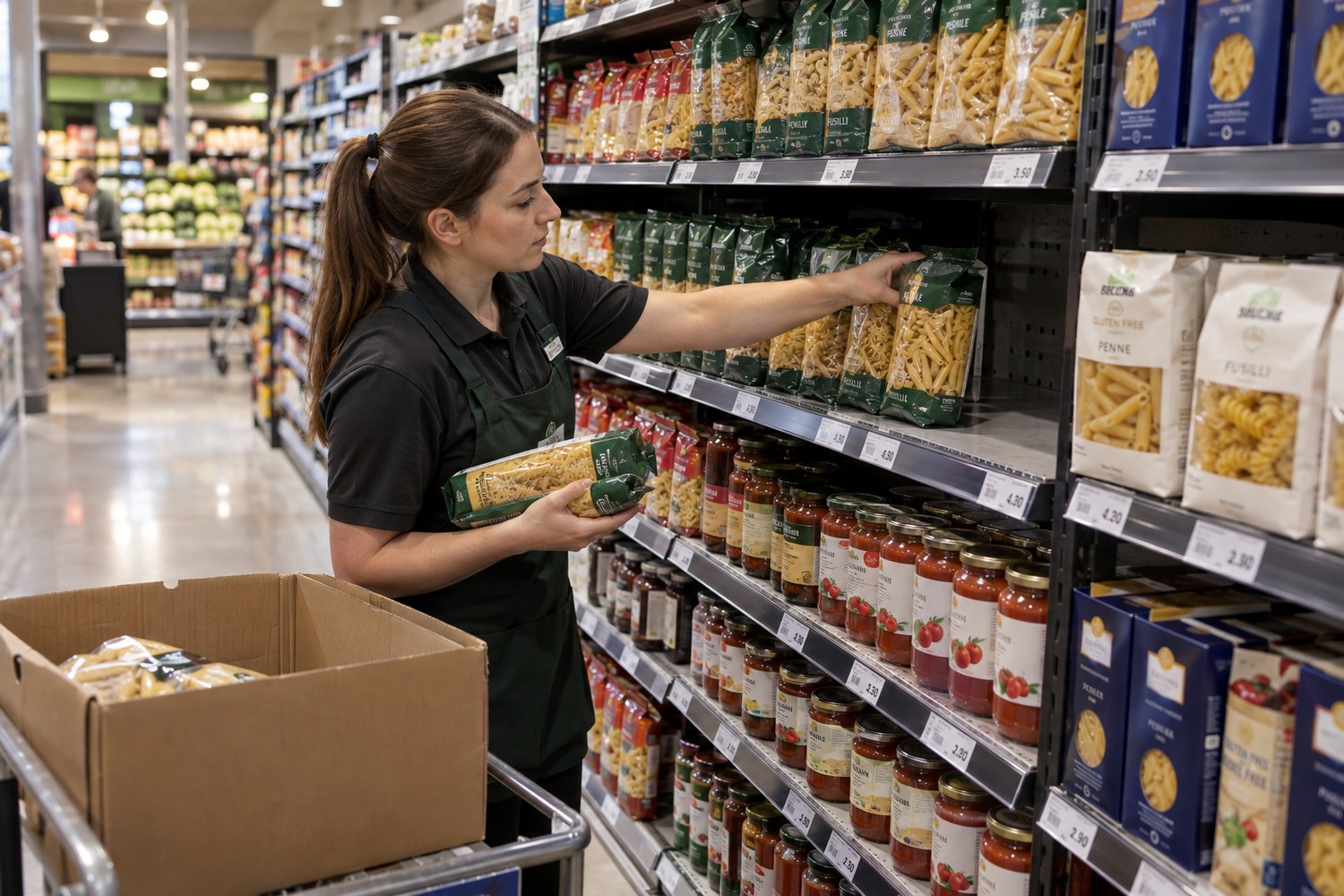
Space is the part of the plan two parties most often disagree about. A supplier wants more facings. The retailer wants each facing to earn its place.
Space is usually allocated against rate of sale. Rate of sale is how many units a product sells in a store in a week. That is the right place to start and a bad place to finish.
Two different problems ask for more facings, and product merchandising often treats them as one. The first is visibility. The product has to be seen to be chosen. One facing in a busy bay is often not seen at all. The second is replenishment. The product sells fast enough that too few facings leave an empty shelf by Saturday afternoon. Both look the same on a stock report.
A slow product with a distinct shopper is not the same as a slow product. Some products hold a mission nothing else in the category answers, such as a single allergy-free line. Delete it and the shopper does not move to the next brand. They leave the store and buy the whole basket somewhere else.
There is an honest limit to facings, and it is sourced. Past a threshold that differs by category, extra facings do very little. Position keeps working after facings stop. The same 1994 study put it plainly. A couple of facings at eye level did more for a product than five facings on the bottom shelf.
Where eye level fits, and where it does not

Start with the rule as it is usually given. The band at or slightly below an adult’s eye line sells more than the shelves above and below it. It is the most contested space on the fixture.
Now the limits. Eye level is not a fixed height. It moves with the height of the fixture, the store format and who is doing the shopping. The researchers behind that 1994 study pressed retail experts on what eye level meant. The answers covered any shelf above the knees and below about six and a half feet.
A children’s eye line is a different decision with its own consequences. A category aimed at children sits lower than one aimed at the adult pushing the trolley. Put it at adult eye level and you hide it from the person who asks for it.
Then there is the arithmetic, which ends most eye level arguments. A whole category cannot be at eye level. The rule applies to the two or three products you have already decided matter most. It says nothing at all about the other forty.
The same study found no agreement on the best horizontal position. The categories in it split evenly between the centre of the aisle and the edges. So the vertical decision is worth arguing about. The horizontal one is worth testing rather than asserting.
What the fixture will not let you do
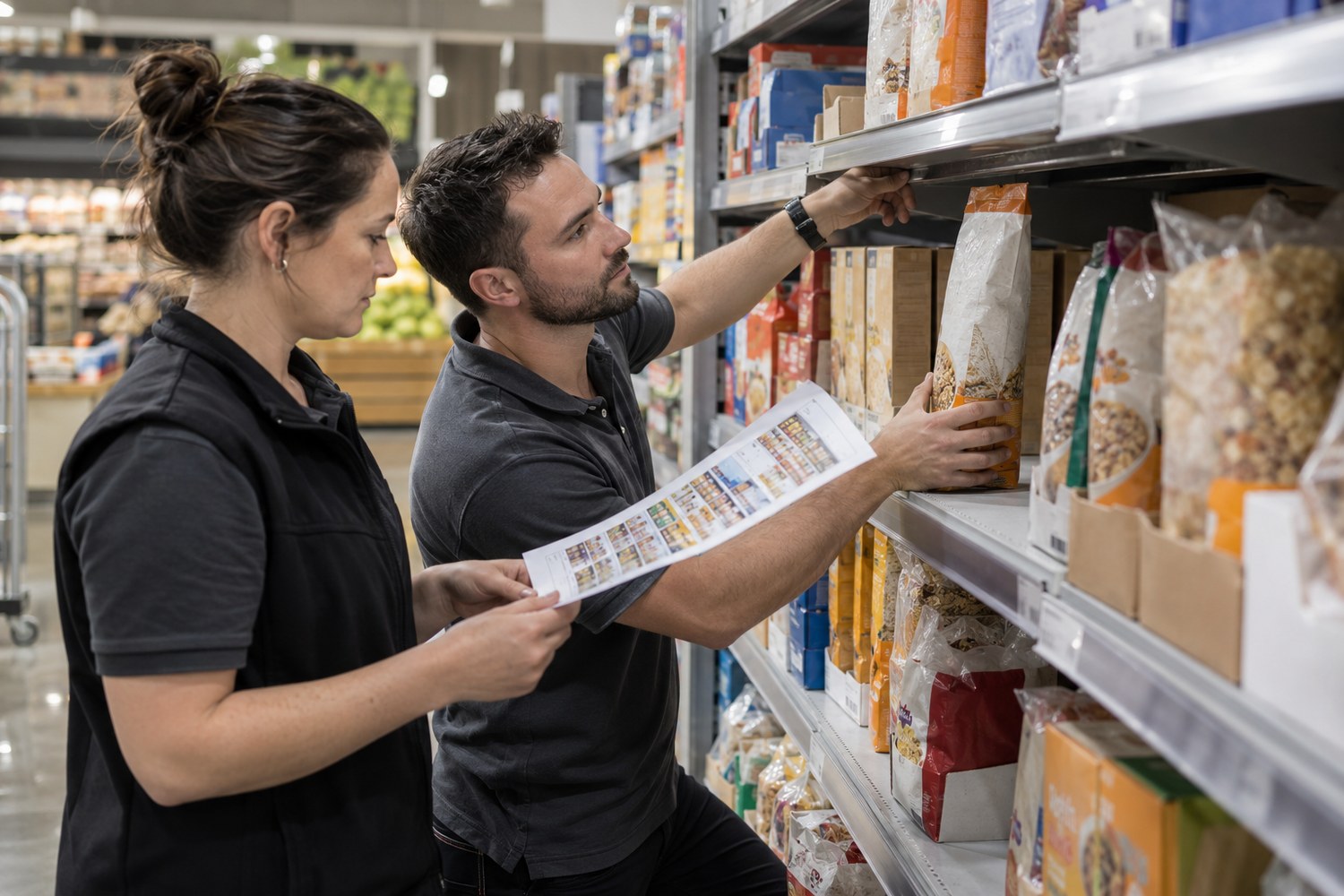
A placement that cannot be built is not a placement. What the shelving allows is the difference between a plan and a plan that survives the reset.
Shelf pitch, tray depth and shelf height decide whether a layout that works on screen holds the stock it needs. Shelf pitch is the vertical gap between one shelf and the next. Lose a few centimetres of it and the tall pack no longer stands up.
Not every fixture is open shelving. Gravity feed, where product rolls forward as the front unit is taken, fixes the number of facings by lane width. Chilled wells and hooks each impose their own rules. A plan drawn for open shelving arrives wrong in all three.
Formats vary across a network. Draw a placement for the large format and issue it unchanged to the small format. Much of the estate then cannot build it, and those stores look non-compliant for a reason that has nothing to do with effort.
Replenishment is a physical constraint too. Say a bay cannot be refilled without unloading the one beside it. The placement stops being followed, and nobody reports it.
Most placement arguments are lost here. Both sides are arguing about a fixture neither of them has stood in front of.
How you know the placement was right

The usual answer is rate of sale after the reset. It arrives late, and it arrives confounded. By the time the numbers are in, the price, the promotion and the season have all moved too. Planogram merchandising decisions then get judged on a number with three other things baked into it.
The alternative is to answer the question before the fixture ships. Put the placement in front of shoppers. Find out whether the product it was built around is found, and how long that took.
What that gives you is a controlled comparison. Two placements, the same shoppers, the same bay. The only difference is the thing you are arguing about. The shopper measurement can be eye tracking in a headset, or an online simulated shop with a survey afterwards. Either way the answer arrives before the reset is locked, rather than a quarter after it.
There is one limit worth saying out loud. This tells you whether the placement works. It does not tell you whether the range was right. It will not rescue a product the category did not want.
A placement test answers one question at a time. It is narrower than what retailers examine when they test a planogram, a subject of its own.
These rules are settled one fixture at a time, and a network has more than one fixture. A placement that tests well in the large format can still arrive wrong in the small one. The format mix matters as much as the rule.
Bring Storelab one fixture and the two placements being argued over. Have both built and walked before the reset is locked. Send the planogram files and the format in question, and the comparison comes back instead of an opinion.
Frequently asked questions
What is supermarket item placement strategy?
It is how a retailer decides which product goes where inside a single run of shelving, and how much of that shelving each product gets. It picks up after the range is set and stops at the edge of the fixture.
Does eye level really sell more?
The band near an adult’s eye line is the strongest position on most fixtures, so the rule holds as far as it goes. It cannot be applied to a whole category, and what counts as eye level shifts with the fixture and the shopper.
How many facings does a product need?
Enough to be seen, and enough to survive the busiest trading day without going empty. Those are two separate tests, and adding facings past that point does less for sales than moving the product up or down.
How do you test a placement before the reset?
Build both versions of the bay, then show them to shoppers and watch what gets found. The comparison is useful because everything except the placement is held still.