
Store design software closes the decision gap
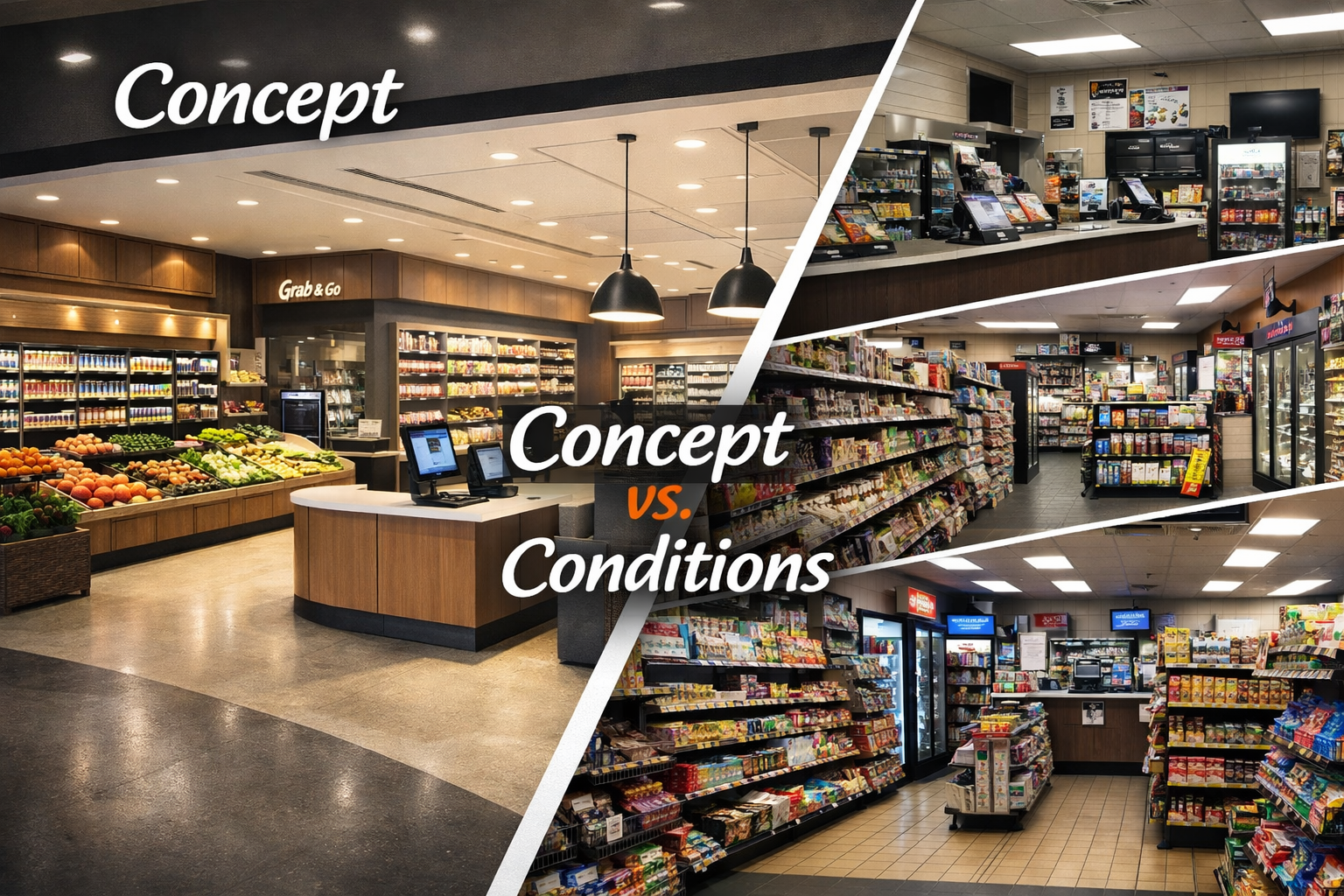
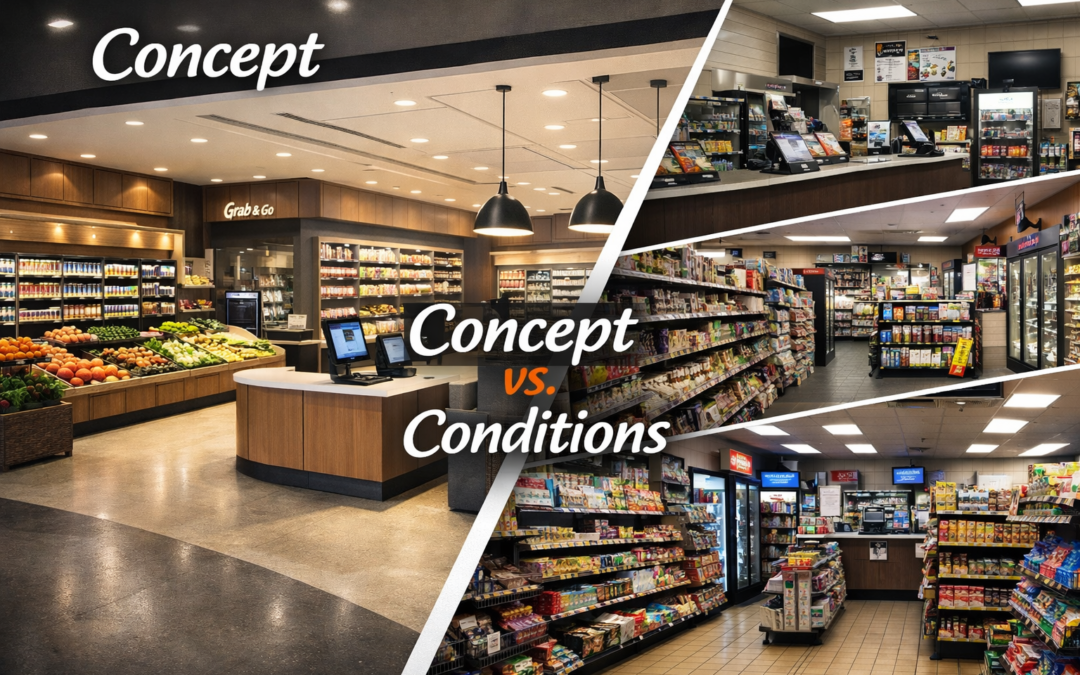
Most large retailers can point to at least one concept that was strong, well-designed, and commercially sound on paper, and still created problems after rollout. The design was not the issue. The fixture worked. The category story made sense. The visual merchandising team was behind it. And yet the execution across 200 or 400 stores surfaced friction that nobody resolved before money was committed.
The usual post-mortem lands on familiar ground: the concept wasn’t tested across enough formats, or operations flagged concerns too late, or the campaign worked in full-format stores but created congestion in smaller ones. What rarely gets named is the structural cause. The business had a strong way to develop ideas and a weak way to interrogate them.
That is the gap store design software is built to close, giving retailers a more structured way to move from concept to confident execution.
Design capability is not the problem
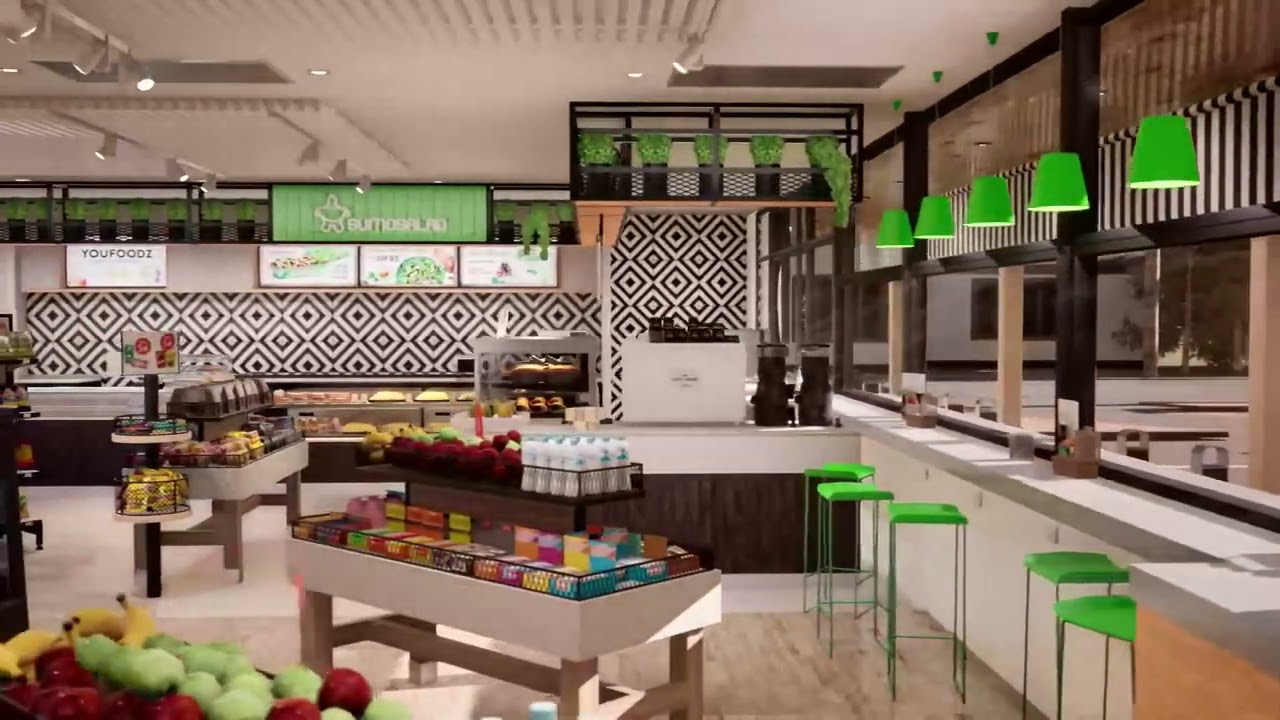
Australian retail does not lack design talent. Walk through a Woolworths Metro refit or a Chemist Warehouse flagship and the design thinking is evident. Category layouts are considered. Fixture systems are refined. Visual merchandising teams know how to create presence, guide flow, and express a commercial proposition through space.
The problem is rarely that the concept is weak. It is that the organisation has no structured way to test whether a strong concept will survive contact with the full range of conditions it needs to work in.
A 120 sqm Metro store in inner Sydney and a 3,800 sqm full-format suburban site in south-east Melbourne present completely different spatial pressures, traffic patterns, and adjacency constraints. A seasonal activation that reads well in a presentation deck may crowd an already contested zone in one format and disappear in another. A supplier-funded display that earned enthusiastic internal support may create problems for replenishment access that only become obvious when operations reviews it against a real floor plan.
Design judgement shapes the quality of the idea. What it cannot do, on its own, is simulate the conditions that will determine whether the idea holds.
What sits in the gap
Between a resolved concept and a confident commitment, most large retailers rely on a combination of presentation decks, static planograms, spreadsheet-based space plans, and traditional retail planning software.
But they tend to weaken at exactly the point where the stakes rise.
- Cross-functional interpretation diverges. Category sees range opportunity. VM sees brand expression. Operations sees a replenishment problem. Commercial sees margin risk. Everyone is reacting to the same flat materials but imagining different outcomes, and the organisation has no shared environment to resolve the difference.
- Format variation goes untested. A concept is approved for rollout based on how it looks in the primary format. How it behaves in a smaller store, a different layout, or a site with an awkward entrance or gondola configuration is left to store teams to work out.
- Execution assumptions stay hidden. The concept assumes a certain fixture height, sightline, or promotional zone. Whether those assumptions hold in a live trading environment with competing activity, seasonal stock, and real customer movement is not tested until the concept is already in stores.
- Late objections become expensive. When operational or practical concerns surface after sign-off, the business either absorbs rework costs or pushes ahead knowing the execution will be compromised. Neither outcome is acceptable at scale.
- This is not a design failure. It is an infrastructure gap in how the organisation moves from “we like this” to “we are confident enough to commit.”
What store design software changes
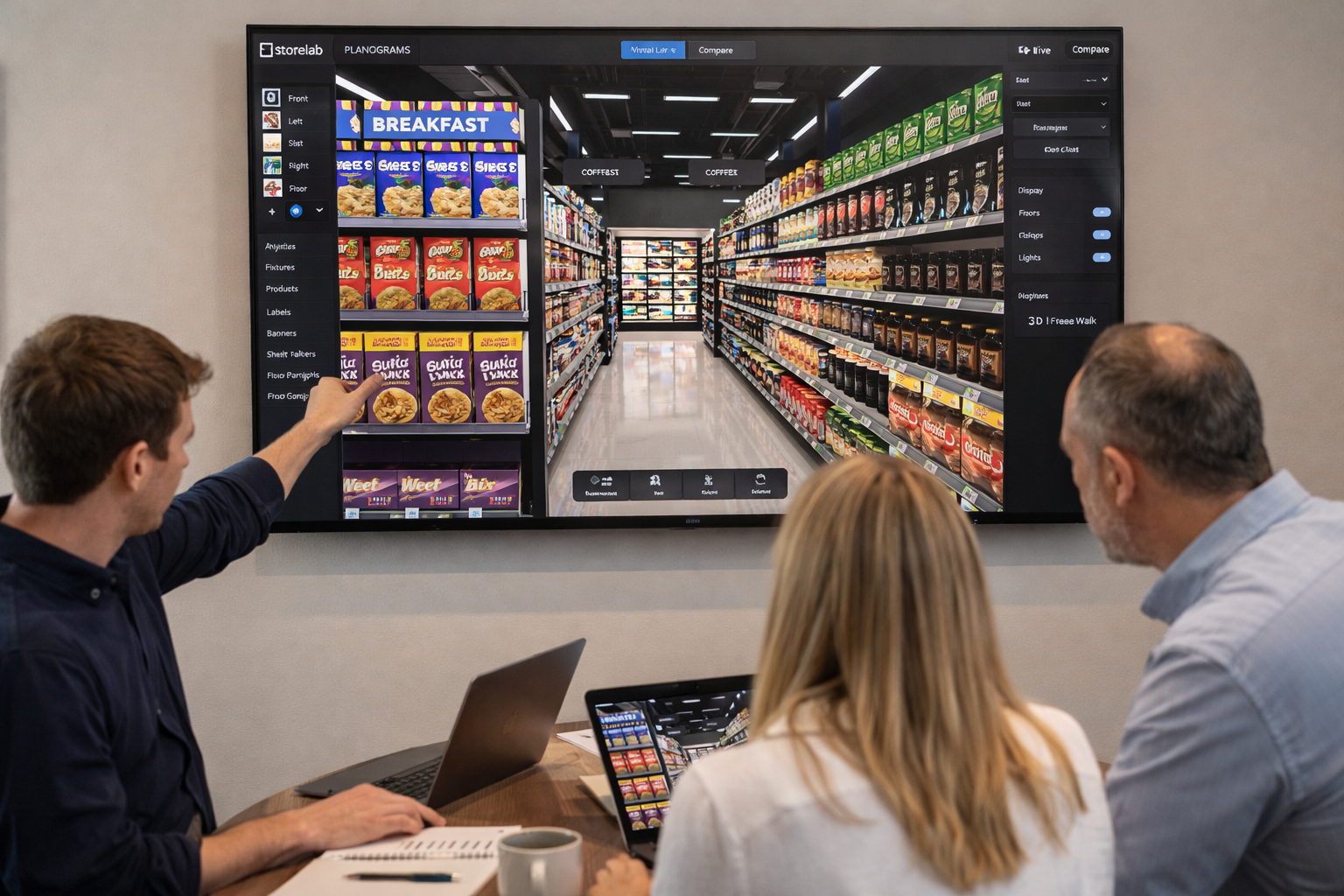
Store design software closes the gap by giving cross-functional teams a shared, spatial environment to review concepts before capital, labour, and store capacity are committed. Platforms like Storelab Connect enable teams to test layouts, challenge assumptions, and align decisions using the same spatial context rather than static materials.
| What the organisation needs | What design provides | What store design software provides |
|---|---|---|
| A concept worth pursuing | Creative direction, brand interpretation, spatial instinct | A structured way to test the concept across conditions |
| Confidence that the concept will hold | Persuasive presentation of the idea | Evidence of how the idea behaves in different formats |
| Cross-functional agreement | A strong brief that each function interprets | A shared review environment where teams react to the same thing |
| Consistency across stores | Guidelines and intent documents | A way to examine format variation before rollout |
| Early identification of practical issues | Experience-based flags from senior team members | Structured spatial review that surfaces problems before commitment |
| Faster resolution of disagreement | Stronger advocacy for the concept | A common reference point that shifts debate from opinion to observation |
The distinction matters commercially. Design makes ideas worth backing. Store design software helps the organisation decide whether it can back them with confidence at the scale, pace, and format variation the business actually operates in.
Where the cost shows up
The cost of the decision gap is rarely dramatic. It accumulates quietly in rework, compromised execution, delayed rollouts, and planning cycles that consume more internal energy than they should.
In a business rolling out a category reset across 300+ stores in three or four format types, the cost of discovering a fixture clearance issue or an adjacency conflict after sign-off is not just the physical correction. It is the time lost, the supplier disruption, the field team reallocation, and the downstream effect on other projects waiting in the planning queue.
For seasonal activations with tight selling windows, the cost is sharper. A concept approved two weeks late because cross-functional alignment could not be reached compresses production, logistics, and in-store installation. The result is either a rushed execution or a missed window. Both are expensive.
| Decision type | Where the gap tends to appear | Commercial consequence |
|---|---|---|
| Category reset across formats | Concept approved on primary format only | Execution varies, rework in smaller or non-standard stores |
| Seasonal activation | Late sign-off compresses production | Rushed install, inconsistent execution, missed trading days |
| New fixture or display concept | Operational reality not tested early | Field teams adapt on the fly, intent is diluted |
| Supplier-funded campaign | External timeline drives internal decision | Approval confidence is lower, post-rollout corrections increase |
| Multi-format rollout | Single-format review assumed to represent all | Store-level variation creates inconsistency the customer notices |
None of these are catastrophic individually. But across a full year of store decisions, they represent a significant and largely avoidable drag on commercial performance. This is why many retailers are investing in virtual store software that can validate decisions before rollout and reduce downstream cost.
Questions senior teams should be asking
Before treating store design software as a procurement decision, the more useful conversation is diagnostic. These questions help identify whether the decision gap is costing the business more than it should.
Where do concepts stall between internal support and formal sign-off?
If the answer is “at the point where practical concerns meet creative ambition,” the organisation may lack a shared review environment.
How often does the final in-store execution match the approved concept?
If the gap is consistent, the approval process may not be testing the concept under realistic enough conditions.
How much rework follows a typical category or campaign rollout?
If correction and adaptation are routine rather than exceptional, the business is absorbing the cost of decisions that were made with insufficient scrutiny.
Can category, VM, operations, and commercial review the same concept in the same context?
If each function is interpreting flat materials differently, disagreement is structural, not personal.
Does the planning process account for format variation before sign-off?
If rollout risk across different store sizes and layouts is assessed after commitment rather than before, the business is carrying avoidable exposure. Tools like Storelab Research support earlier validation by allowing teams to test concepts against real shopper behaviour and store conditions.
Are field teams raising issues that should have been caught earlier?
If store-level feedback consistently identifies problems that head office materials did not reveal, the review process is leaving too much to assumption.
The answers do not always point to software. Sometimes the issue is design leadership, or governance, or how stakeholder input is sequenced. But when the pattern points to a gap between concept quality and decision confidence, store design software is usually the most direct way to close it.
One idea, not one tool
The strongest retail organisations do not treat design and structured review as competing investments. They treat them as different layers of the same process.
Design shapes the ambition. Structured review tests whether the organisation can deliver on that ambition across the conditions it actually faces. Neither works well without the other. A strong concept that is not pressure-tested creates avoidable risk. A rigorous review process applied to a weak concept produces efficient mediocrity.
For senior retail teams, the real question is not whether to invest in store design software or in design capability. It is whether the business has built a decision process that matches the scale, pace, and financial exposure of the store decisions it is making.
In a market where margin pressure is real, space is contested, and the cost of getting a rollout wrong lands in both the P&L and the customer experience, that question deserves a serious answer. Increasingly, that answer involves using store design software not just to visualise concepts, but to test and validate them before rollout—often delivering measurable ROI well before implementation.
Frequently asked questions
Does store design software replace a store designer?
No. Design and software serve different roles in the decision process. A store designer shapes the concept, brings brand interpretation, spatial judgement, and creative direction. Store design software helps the organisation test whether that concept will hold across formats, survive cross-functional scrutiny, and execute consistently at scale. The two are complementary, not interchangeable.
When is store design software most valuable?
It adds the most value when concepts need to be reviewed across multiple store formats, when cross-functional teams are interpreting the same materials differently, or when the business is committing significant capital to a rollout and needs stronger confidence before sign-off. The common thread is decisions where the cost of being wrong is hard to absorb after the fact.
What can a store designer do that software cannot?
A designer can interpret brand identity, set visual tone, shape the atmosphere of a space, and make judgement calls about how a store should feel to customers. These are creative and strategic decisions that require human experience and instinct. Software cannot make those calls. It can test whether the resulting concept is practical, consistent, and ready for the conditions it will face in store.
What does store design software do that a designer alone cannot?
It gives the organisation a shared spatial environment for reviewing concepts before execution. It allows teams to examine how a layout, display, or category change behaves across different store formats, identify practical issues earlier, and build cross-functional confidence before capital is committed. At scale, that structured review—often enabled by virtual store software is difficult to replicate with presentation materials alone.
Is this only relevant for large retailers?
The issue is most visible in larger businesses because store count, format variation, and internal stakeholder complexity amplify the cost of weak decisions. A single-format retailer with 20 stores may manage the decision gap through experience and close communication. A multi-format business rolling out across hundreds of sites in different configurations faces a fundamentally different planning challenge.
How should a retailer decide between investing in design and investing in software?
Start by identifying where the current process breaks down. If concepts are consistently strong but stall at approval, struggle across formats, or create rework after rollout, the issue is likely in the review and testing layer, not the design layer. If concepts are weak, generic, or fail to express the brand, the issue is design leadership. Most large retailers need both, but knowing where the gap sits determines where to invest first.